Anthropic Claude Science now integrates the NVIDIA BioNeMo Agent Toolkit to accelerate computational life sciences research. Anthropic has launched the public beta of Claude Science, an AI workbench built for scientific research. The platform enables scientists to converse directly with digital agents using natural language to execute end-to-end research workflows.
This system connects natively to the NVIDIA BioNeMo Agent Toolkit, exposing high-performance computing resources as callable skills within the Claude environment. NVIDIA has established what most would consider to be the world’s most comprehensive GPU-accelerated computing stack containing physical hardware, software frameworks, operational libraries, scientific models, microservices, and domain-specific tools.
This hardware and software base allows researchers to run sophisticated workflows and increase their iteration speeds. The integration imports NVIDIA-accelerated models, computational libraries, and NVIDIA NIM microservices into the environment where scientists conduct their primary research. 18 of the top 20 global pharmaceutical companies already deploy NVIDIA BioNeMo in their production environments, demonstrating its high penetration across the ecosystem.
Claude Science translates natural language intent into operational action. Researchers avoid manually configuring predictive models, setting up network endpoints, or managing complex software environments. The scientist describes a specific research task – such as analysing a genomic sequence, predicting a precise protein structure, or designing a potential molecular binder – and Claude Science interprets the plain-text request and orchestrates the resulting execution using preconfigured, domain-specialised agents.
Executing complex molecular design workflows These specialised agents understand established laboratory and computational protocols across genomics, proteomics, single-cell analysis, cheminformatics, and clinical research. The NVIDIA toolkit provides these scientific agents with the necessary data context to map each operational step to the correct NVIDIA capability.
The toolkit packages NVIDIA-accelerated functions as specific, callable programmatic skills. It provides the agents with detailed information regarding each specific tool’s exact purpose and its required data inputs. This configuration enables Claude Science to select the right computational tool, format valid data inputs, execute the processing work across deployed NVIDIA compute resources, and return the finished output for human review.
The integration establishes a fast iterative loop between human scientific reasoning and machine-accelerated computational processing. Scientists inspect the generated outputs, refine their specific queries, and determine subsequent steps while maintaining their focus entirely on the core science. Producing better inhibitors for common cancer targets demonstrates the practical application of this deployed system.
A scientist initiates the pipeline by identifying a known cancer-causing antigen mutation. The researcher then asks Claude to design numerous potential inhibitors targeting that specific mutation. Claude Science works in tandem with the BioNeMo Agent Toolkit and NVIDIA NIM microservices to accelerate the entire pipeline of high-throughput inhibitor prediction, optimisation, and subsequent validation.
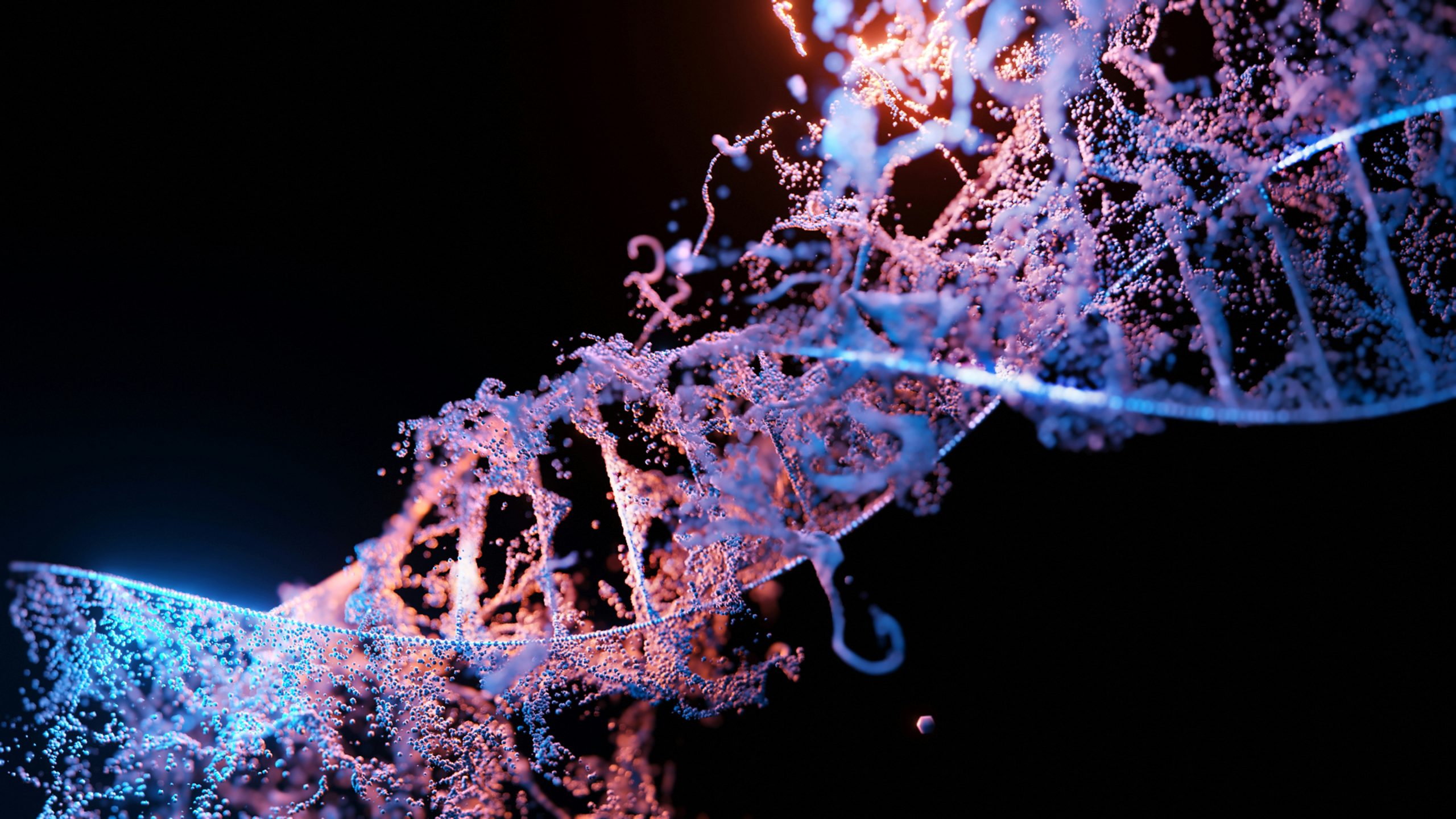
Accelerating single-cell and genomic data pipelines The toolkit grants scientists access to accelerated workflows and advanced open models, including Evo 2, Boltz-2, and OpenFold3. These models deliver biomolecular capabilities powered by NVIDIA software libraries, ensuring the autonomous agent possesses a purpose-built scientific model for each distinct phase of the workflow.
AI agents require specialised computational tools to reason, plan, and complete tasks within life sciences. A single comprehensive workflow might require the agent to fingerprint a massive library of compounds, cluster promising molecular hits, generate conformers for top structural candidates, analyse genomic context, and compare perturbation responses before recommending the next physical laboratory experiment.
An agent operates only as fast as its underlying computational tools execute. The NVIDIA BioNeMo Agent Toolkit supplies these agents with accelerated tools to operate at maximum hardware speed. Genomic analysis processed through NVIDIA Parabricks drops from hours to minutes, allowing the agent to factor complex genomic context into operational decisions in near real-time.
The RAPIDS-singlecell tool, developed by scverse , compresses a 1.3-million-cell preprocessing and clustering workflow from 52 minutes down to 25 seconds. This aggressive speed reduction turns single-cell analysis into an active part of the agent’s reasoning loop rather than a delayed, offline batch job. The nvMolKit accelerates cheminformatics tasks like similarity search and conformer generation by up to 3,000 times, delivering results rapidly as the agent iterates across massive chemical spaces.
Standardising production deployments with NIM microservices Teams require stable deployment mechanisms for these advanced modeling pipelines. NVIDIA packages its open biomolecular models as BioNeMo NIM microservices. These operate as enterprise-ready inference endpoints tailored for production environments. The microservices are fully containerised and feature a pre-integrated, tuned, accelerated software stack designed for high-performance inference.
The autonomous agent interacts with a single stable API to trigger these remote production deployments. The NVIDIA BioNeMo Agent Toolkit remains open and harness-agnostic. This architectural design ensures the same scientific skills function consistently across different agent frameworks and independent enterprise research platforms.
Engineering teams can download the toolkit and its associated scientific skills through NVIDIA developer resources and GitHub code repositories. During the active public beta phase, Anthropic is requesting direct feedback from researchers regarding necessary software integrations and additional domain specialists. See also: Anthropic deploys Claude Sonnet 5, Fable and Mythos restored Want to learn more about AI and big data from industry leaders? Check out AI & Big Data Expo taking place in Amsterdam, California, and London.
The comprehensive event is part of TechEx and is co-located with other leading technology events including the Cyber Security & Cloud Expo . Click here for more information. AI News is powered by TechForge Media . Explore other upcoming enterprise technology events and webinars here . The post NVIDIA BioNeMo accelerates Anthropic Claude Science appeared first on AI News .