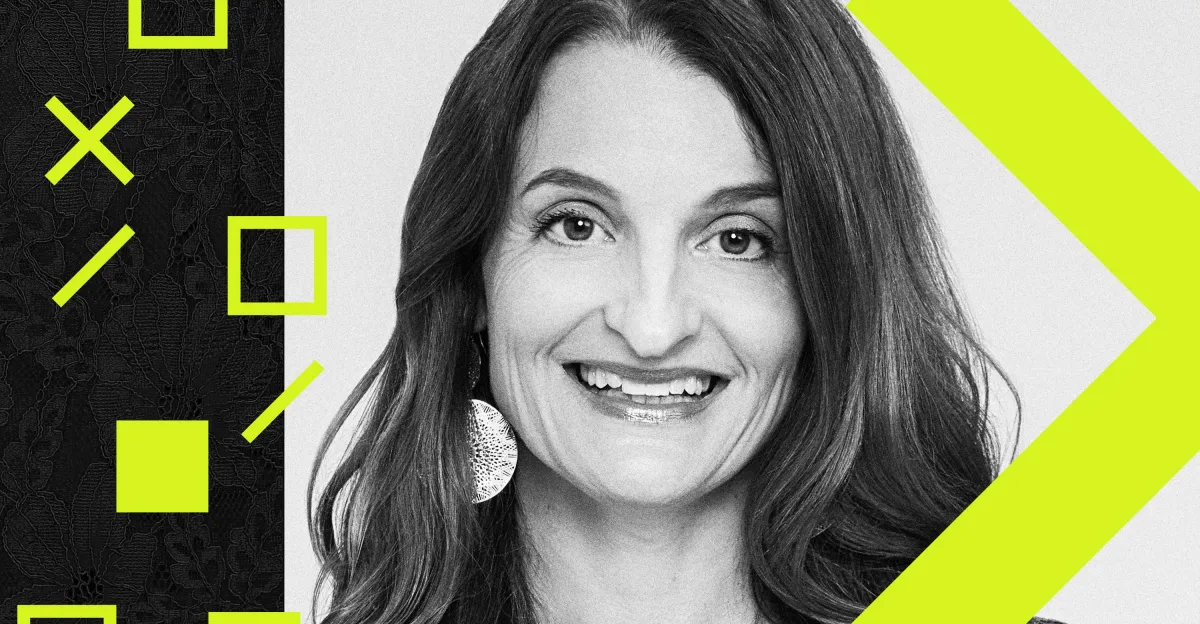
We’ve got a special Decoder today — I had the chance to talk with Amy Lanzi, the CEO of Digitas North America, in front of a live audience at the Uber Villa at the Cannes Lions advertising festival in the South of France. I know, it’s a hard gig, but I do it for you. Amy has been on Decoder three times now , and she’s one of my favorite people to chat with — she is clear-eyed about what the advertising industry really is and does for brands and what all the money sloshing around the ad-supported internet really accomplishes.
You’ll hear her say that she thinks the traditional chief marketing officer role is done for and that her job is driving business results using data and analytics. Verge subscribers, don’t forget you get exclusive access to ad-free Decoder wherever you get your podcasts. Head here . Not a subscriber? You can sign up here . That might sound straightforward, but it was a shocking statement at Cannes, which is where the entire advertising industry gathers every year, drinks rosé, and convinces itself of outrageous nonsense.
This year, the big trends were creators, and, of course, AI. And Amy, alongside her parent company Publicis, aren’t holding back when it comes to calling out the AI nonsense for what it is. Publicis actually put out an ad before Cannes listing all the false promises being made about AI when it comes to advertising, so I asked Amy about that, and what AI might actually be good for, beyond just generating slop and slop headlines.
After all, Meta and the rest of the big platforms were all at Cannes talking about generating more and more ads with AI — something that threatens almost every other company in the industry. Of course, we also talked about the creator economy and how all the creators at Cannes were openly calling themselves marketers — essentially turning themselves into small ad agencies of their own.
On top of that, the biggest creators in the world almost all launch their own products — something Amy and Digitas see as an opportunity, as those companies will need operational scale and excellence if they’re going to be successful over time. There’s a lot in this one — like I said, Amy is as sharp as they come, and I really enjoy talking to her about how the money really works.
Okay: Amy Lanzi, CEO of Digitas North America, live at Cannes. Here we go. This interview has been lightly edited for length and clarity. Hello everybody. I’m Nilay Patel. I’m the editor in chief of The Verge and the host of Decoder . Hi. Amy Lanzi, CEO of Digitas, part of Publicis Groupe. I’m very excited to be here with Amy. Amy, we have to stop meeting like this.
We only talk during Decoder podcasts. I know. We do. We have to do this more. We both live in New York. We should get together more IRL. Yeah. We only travel long ways to talk to each other in front of live audiences, which is wonderful. Thank you all for being here. Thanks to Uber for having us. I have a lot to talk to you about.
It seems like every year we hang out and the entire advertising industry is in a new form of chaos. And that chaos doesn’t really get resolved. We just move on to the next form of chaos. This year, it’s AI. Yes. I don’t think that’s a surprise to anyone in this room. Everywhere here at Cannes, the conversation is about AI. Let’s just get started.
Publicis put out what you would call a fake ad, a documentary ad. It’s called “The Wrong Promises” and it is basically just a series of vignettes of promises people are making in pitches, including “you don’t have to pay us until you win a Lion,” which is incredible. And it says “this is real” at the bottom. Yes. Tell me about what you are hearing in these rooms that are leading to these crazy AI promises getting made.
Thank you for bringing up our fun video. It was really designed to stimulate conversations like this. In the business right now, it’s crazy. I’ve been in this business for a long time and we are seeing all kinds of partners offer wild things in the pitch process. It’s different than it’s been before, whether it’s all the things that were, of course, hyped in that video, but also just insane commercial deals that are just generally bad for people and the business.
And they’re coming in all different types — whether it’s about free AI, free platform, free whatever — that are creating a dynamic that is not good for all of us in this industry. Because we all need to work together. It is a people business and all of those things really, long-term, create a people problem. Not to get all Toy Story 5 here, but the conversation that you and I are constantly having is about the pressure of the tech platforms on the media ecosystem, whether that’s publishers, whether that’s agencies, whether that’s creators at some point.
We’ll come to that. But the idea that the platforms have enough scale to promise you business results and then deliver them — whether or not that happens, but they certainly can make those promises — is leading to some of these outcomes. And some of these promises about AI and what it might be able to do, is there any reality to that? Or is that just a reaction to the pressure the platforms are putting on the ecosystem? Whenever this conversation comes about, the promise of AI, I always go back to the promise of programmatic.
How many of you remember when programmatic was a thing? No more people, it was all going to magically— No one in this room admitted that they remembered that programmatic advertising was a thing. Yes, right, exactly. And that was a time when it was all just going to magically happen and it magically still needs people, still has the nuance of brands and the marketplace and all of the things that we do to define our partnerships and what are going to be game changers.
I go back to that because I feel like the AI story is the new programmatic story, with the promise of everything just being absolutely automated, and that absolutely did not happen. When programmatic was rising, there were all those promises at that time as well and now we are living that. But what is different here is it’s coming from either agency partners or tech and platform partners.
It creates a different chaos to where you started. Publicis and Digitas also have huge investments here. You were early, right? You bought Influential in 2024 to do analysis of how the creator ecosystem was doing. You have Digitas AI, and it’s been two years that you’ve been into that. How do you think about those products and those platforms in an ecosystem that is full of these promises? For me — and I’ll talk about Digitas AI in particular — we started to make our people better unicorns, as we talked about the last time we met.
It was really to say, “Okay, everyone look at what’s on your desk, what’s in your day, and think about what you absolutely could build an agent to do and that way we free up our time to do this.” That’s where we started. And then what was fascinating is the magical things that were able to be built by the young talent in the industry that is solving a working problem but eventually a business problem.
That still holds because every day, as a Gen Xer, I always say, “Hackers wanted.” If you have a hacking mentality and you’re curious, you can actually do better things than I did when I was a hacker in that age. It enables us to use our agents, use our data to get to better ideas, better workflows that are more of a surprise and delight to clients than what you might have brought in the first round.
Because you can do many rounds before you actually get to the final product and that’s how you get to the unique outcome. You can tell that Amy is a Decoder pro because she has led directly to the Decoder questions. I’m very curious if AI, at least in the enterprise context, is a top-down or bottom-up change agent. You just restructured Digitas, right? You put in a bunch of new roles.
You have a new chief intelligence officer, a new chief systems officer, and my favorite, a chief transform